
A solar company sells a family a rooftop array for the new backyard cottage, sized from the main house's electric bill. An accessibility contractor installs grab bars and calls the unit "ADA compliant." A smart home installer puts the parent's unit on the kids' Wi-Fi with a camera in the living room. A landscaper pours a patio that pushes the lot over its coverage limit. Each of them did good work for the wrong building. The Accessories department exists because an ADU is not a smaller version of the main house. It is a separate home for a specific person, on a lot with a fixed amount of sky, ground, and privacy, and proficiency means designing for that.
The ADU Proficiency Standard
Jurisdiction literacy. You know which of the six New England statutes governs the parcel in front of you, you know the town's own rules sit on top of it, and you check the current text before you speak. You never carry one state's rule across a state line.
Craft adaptation. You know exactly how an ADU changes your own discipline, not in general, but in the specific decisions you make and the specific mistakes your profession tends to make on these projects.
Handoff fluency. You know which question belongs to which other professional, you can name that professional, and you hand the question off intact instead of answering it badly.
Honest limits. You say "that is a question for the building official, the attorney, the lender, the surveyor" when it is, and you do not promise approvals, values, or rents to anyone.
Proficiency is a standard, not a stamp. The ADU Exchange does not license, certify, or vouch for any professional, and membership in the Ecosystem is not a competence credential. Verify every license with the state board that issues it.
This guide is one of six in the ADU Proficiency Series, one for each department of the Ecosystem. Each applies the same four-part standard to a different profession, because an ADU project is only as strong as its least proficient professional.
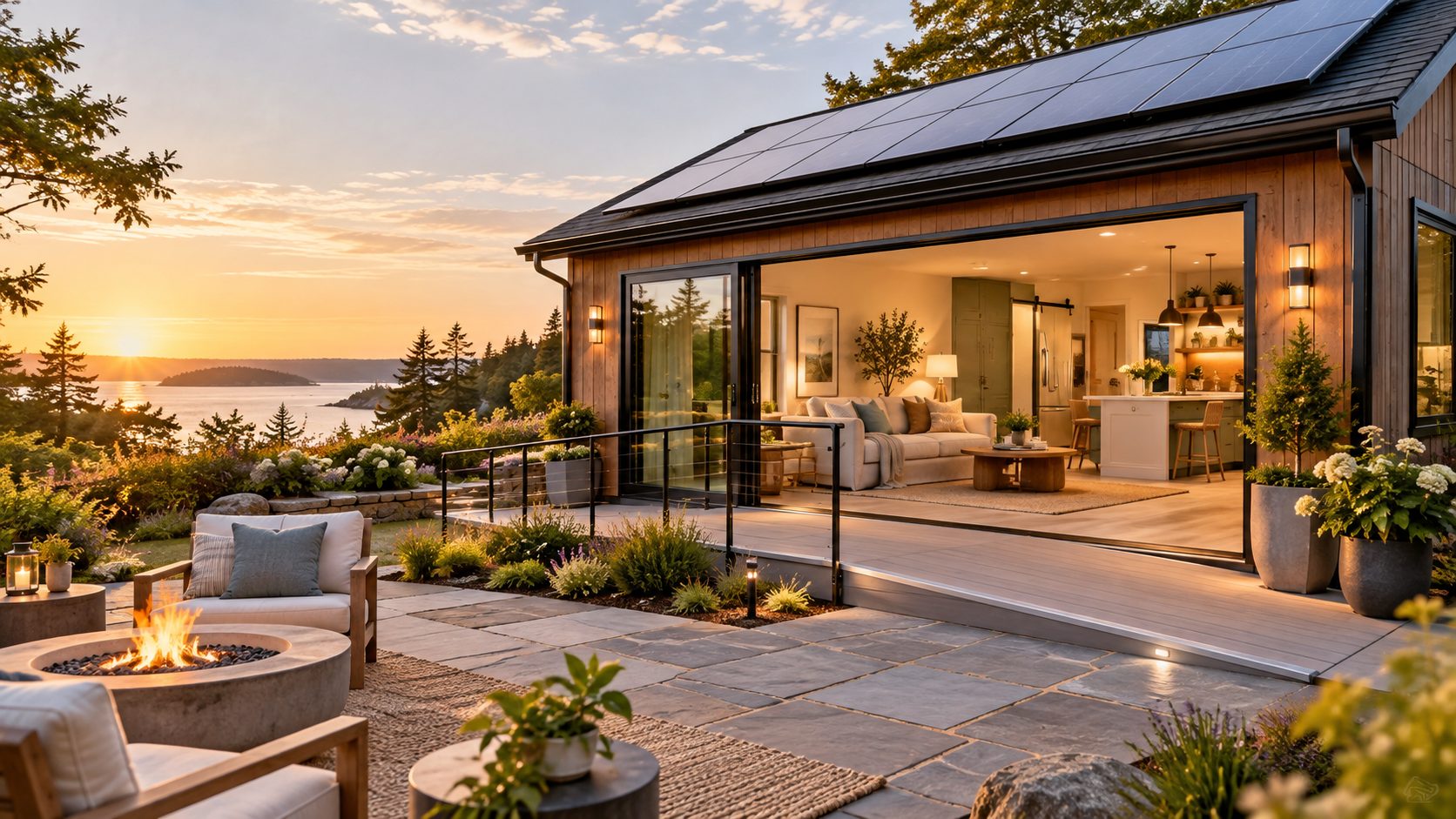
Solar and Energy
An ADU roof is small, often shaded by the main house or the trees that made the backyard pleasant, and sometimes oriented for the lot rather than the sun. A proficient solar installer models the ADU roof as its own site, not as an extension of the main house, and tells the homeowner honestly when the better array belongs on the main roof, a ground mount, or nowhere.
Then the metering question. If the ADU shares the main house's meter, the array serves the whole lot and the household economics are shared. If the ADU has its own service, the array needs its own interconnection and the net metering treatment depends on the utility and the state. In the six New England states net metering and the solar incentive programs differ by state and in some cases by utility, and the federal residential credit was curtailed by 2025 legislation. A proficient installer quotes the incentive landscape as it stands on the day of the proposal, in writing, with the program named, and never as a permanent feature of the economics.
Proficiency also reaches ownership. A leased or power-purchase array on a unit that will be rented, or on a property that will be sold, carries transfer terms that the homeowner's attorney should read. Battery storage and electric vehicle charging add load the electrician has to calculate; a proficient solar company coordinates with the electrician instead of assuming the service can take it.
Accessibility and Aging in Place
The single most common error in this department is the phrase "ADA compliant." The Americans with Disabilities Act governs public accommodations, commercial facilities, and government programs. It does not set design requirements for a private single-family home or its accessory unit. The Fair Housing Act's design and construction requirements reach covered multifamily buildings, not a one-unit ADU. A proficient accessibility professional knows this and uses the right vocabulary: universal design, visitability, aging-in-place design, and, where it applies, the state accessibility code for the parts of a project it actually covers. Calling a backyard cottage ADA compliant is a claim nobody can verify and a liability nobody needs.
What proficiency looks like in practice: a zero-step entry, a 36-inch clear door, a bathroom laid out for a wheelchair turning radius whether or not one is needed today, a curbless shower with blocking in the walls for future grab bars, lever handles, lighting designed for aging eyes, and a layout that keeps the bedroom and bath on one level. Certified Aging-in-Place Specialist training through the National Association of Home Builders is the most recognized credential in this work; a proficient professional holds it or works alongside someone who does, and an occupational therapist's input is worth more than any catalog.
Proficiency also means knowing the programs. Massachusetts operates a Home Modification Loan Program for accessibility work; Rhode Island's ADU statute creates a by-right path for an owner-occupied property where the unit is a reasonable accommodation for a family member with a disability; every state's Medicaid waiver programs have their own home modification rules. The professional names the program and sends the family to the agency; the professional does not promise the funding. For families planning housing for an adult child with autism or another disability, the University's Transition Cliff guide is the companion reading, and the proficient professional has read it.
Smart Home, Security, and Low Voltage
The ADU is a separate household. A proficient low-voltage professional designs it that way: its own network, its own accounts, its own locks and access control, and a clear answer to who can see what. A parent in the backyard unit is an adult with a right to privacy; so is a tenant, and in a tenancy the lease and the state's privacy rules decide what monitoring is lawful. Audio recording consent rules are strict in Massachusetts and several other New England states, and a camera with a microphone in a unit someone else lives in is a legal question before it is a product choice.
Where monitoring is wanted, for an aging parent who has asked for it or a child with a disability whose care plan requires it, proficiency is building it with consent, with limits, and with the occupant's ability to turn it off. Fall detection, medication reminders, leak and temperature sensors, and remote-controlled access for caregivers are the useful set; a wall of screens is not.
And the basics: a separate doorbell and address marker so emergency services and deliveries find the right door, structured wiring so the unit does not depend on the main house's router, and documentation the next occupant can use.
Landscape and Hardscape
A backyard that gains a building loses yard, and what is left has to do more. Proficiency here is knowing that patios, walks, and driveways count toward lot coverage and impervious surface in many towns, that stormwater has to go somewhere other than the neighbor's basement, that grading around a new foundation protects the ADU and the main house both, and that setbacks apply to more than the building in some ordinances. The proficient landscaper reads the approved site plan before designing, and designs for privacy in both directions, because the family in the main house and the person in the unit each deserve a yard that does not feel watched.
Interior Design and Furnishing
Small-footprint design is its own skill. Built-in storage, furniture scaled to the room, a kitchen that works in a single wall, and finishes chosen for the occupant's age and ability. A proficient designer resists the catalog and asks who is living here, for how long, and what the next occupant might need, because an ADU designed for one grandmother will be a rental, a launch pad, or a caregiver's unit within a decade.
Honest Limits in This Department
- No "ADA compliant" on a private dwelling. Universal design and aging-in-place are the honest terms.
- No incentive, rebate, or credit stated as permanent or guaranteed. Name the program, date the quote.
- No array sized from the wrong building, and no load added without the electrician's calculation.
- No camera in someone else's home without the consent and the lease language that make it lawful.
- No hardscape that the site plan did not account for.
- No upsell past the occupant's need. The most proficient professional in this department is often the one who says the family does not need the thing they came in to buy.
Why It Pays to Be Proficient in Accessories
Accessories is the department that touches the family last and stays with them longest. The solar array is on the roof for twenty-five years. The accessible bathroom is the reason the parent can stay. The access control is what the caregiver uses every morning. Proficiency here is the difference between a one-time install and a client who calls you first for every change the household makes, and it is the difference between a product sold and a problem solved, which is the only kind of sale that earns a referral.
How each profession applies it
- Solar and energy. Offer a lot-level assessment: main roof, ADU roof, ground mount, battery, EV charging, metering options, with the incentives named and dated. Coordinate the interconnection with the electrician's load calculation. Families building an ADU are already thinking about the lot as a system; be the company that models it that way.
- Accessibility and aging in place. Build an ADU-specific universal design package: zero-step entry, 36-inch doors, curbless shower with blocking, lever hardware, lighting, one-level living. Describe it as universal design, never as ADA. Partner with an occupational therapist and hold or hire the CAPS credential. Know the state programs and the Rhode Island accommodation path well enough to point families to the agency.
- Smart home and low voltage. Offer a separate-household package: independent network and accounts, access control with caregiver credentials, consent-based monitoring with the occupant's ability to switch it off, structured wiring and documentation. Write the consent and privacy conversation into your proposal; the family will not know to ask.
- Landscape and hardscape. Read the approved site plan first and design to lot coverage, stormwater, grading, and two-way privacy. A backyard with a building in it needs a landscape designer more than a backyard without one, and most ADU budgets forgot to include you.
- Interior design and furnishing. Small-footprint design for a named occupant, with the next occupant in mind. Built-ins, scaled furniture, single-wall kitchens, finishes for aging eyes and hands. The modular and plan-set units arriving in New England yards are shells; the interior is where the family's money goes last and where it is spent most emotionally.
What it builds
Clients for life: the family that built the unit for a parent will convert it for an adult child, then rent it, then sell the house, and each change needs your trade again. Referrals from caregivers, occupational therapists, and the families who talk to each other about who made the bathroom work. A specialty most competitors in your category do not have, because they are still selling the main-house version of your product to a backyard. And a cleaner liability profile, because nothing you sold was labeled with a law that does not apply.
Where the business comes from
- Aging-in-place families. The largest and most predictable ADU household in New England. They need accessibility, monitoring, and energy work, usually in that order.
- Families planning for an adult child with a disability. Supported living in an ADU is a design brief with monitoring, access, sensory, and safety requirements. The University's Transition Cliff guide reaches these families; the professional who has read it reaches them next.
- Electrification on ADU lots. A new building with a new heat pump and a new panel is the moment a household considers solar and storage for the whole lot.
- Master GCs and modular factories. Both deliver a building and hand the finishing to someone. Be the someone, with a package the GC can put in the proposal.
- Visibility in the Accessories department and the Aging in Place section. Homeowners arrive at these pages having already decided who will live in the unit. The professional listed in their territory who speaks their vocabulary gets the call.
- Occupational therapists, elder care managers, and disability organizations. They see the household before the construction starts. A professional who respects their role gets their referrals.
The boundary is honesty about what the product does: no incentive promised as permanent, no "ADA compliant" on a private home, no monitoring without consent, no upsell past the need. The professional who talks a family out of the thing they came in for is the one they come back to.
The Test: Six Questions Any Homeowner Can Ask
- Did you model the ADU roof on its own, and where does the array actually belong?
- Which program and which credit are you quoting, as of what date, and what happens if they change?
- Which standard are you designing the accessibility to, and why is it not the ADA?
- How is the unit's network, access, and monitoring kept separate from mine, and who consented to what?
- Have you read the approved site plan, and does this patio fit inside the lot coverage?
- Who else on the project needs to know what you are adding, and have you talked to them?
Where the Ecosystem fits. The Accessories department lists solar, accessibility, smart home, and design professionals by territory, and the University files the aging-in-place and supported-living guides here so the family's needs come first and the products come second. The Aging in Place section of the site is the companion to everything in this department.
Six States, One Habit
The habit is the same in every state: read the statute that governs the lot, then read the town. The content is different enough that memorizing one state will get you in trouble in the other five.
| State | What a proficient professional knows going in | Watch |
|---|---|---|
| Massachusetts | A protected-use ADU is allowed by right in single-family zoning districts under M.G.L. c. 40A § 3 and 760 CMR 71.00, sized at the lesser of 900 square feet or half the gross floor area of the principal dwelling. Gross means gross: an unfinished basement counts when it has 6 feet 8 inches of clear height from slab to joist. No owner-occupancy requirement for the protected unit. | EOHLC proposed revisions to 760 CMR 71.00 in 2026; read the regulation in force on the day you rely on it. |
| Rhode Island | R.I. Gen. Laws § 45-24-73 creates by-right paths (owner-occupied property with a family member who needs the unit as a reasonable accommodation, a lot of 20,000 square feet or more, or a unit within the existing footprint), handled by administrative building permit. Statute sets floors on municipal size limits, not ceilings. ADUs may not be used for short-term or tourist rental. | Owner occupancy outside the accommodation path is a legal question, not a slogan. Rewritten in 2024; confirm the current text. |
| New Hampshire | RSA 674:71 through 674:73 require towns that allow single-family homes to allow an attached ADU, with 750 square feet as the floor a town must permit. A town may require owner occupancy. Detached ADUs are at the town's option. | Amended by 2026 N.H. Laws ch. 210, effective August 31, 2026, which changed how units inside preexisting detached structures are classified. |
| Connecticut | C.G.S. § 8-2o set a statewide default allowing accessory apartments with a municipal opt-out mechanism. | Rewritten effective October 1, 2026. Anyone citing Connecticut must read the text now in force, not the 2021 version in their notes. |
| Vermont | 24 V.S.A. § 4412(1)(E) makes one ADU a permitted use on a lot with an owner-occupied single-family dwelling, subject to the conditions the statute lists. | Wastewater and potable water permitting runs through the state Department of Environmental Conservation and is often the gating item. |
| Maine | 30-A M.R.S. § 4364-B requires municipalities to allow an ADU on lots with a single-family dwelling, with statutory limits on what a town may demand. | Amended in 2023 and 2025; one of the more volatile ADU statutes in the region. Re-read before every engagement. |
Above the statute sits the town: dimensional rules, septic and wastewater, wetlands and shoreland buffers, historic districts, conservation jurisdiction, and the building code itself. Below the statute sit private rights: easements, covenants, condominium and homeowner association documents, and mortgage terms. A proficient professional in any department knows the statute answers one layer of the question and that the other layers each have their own reviewer.
Sources
Research checked October 20, 2026. The proficiency standard, the checklists, and the test questions are The ADU Exchange's educational synthesis, not quotations from a regulator or a licensing board. Effective dates, program terms, and local requirements must be rechecked before any application.
- U.S. Department of Justice, ADA.gov, scope of the Americans with Disabilities Act: ada.gov
- HUD, Fair Housing Act design and construction requirements for covered multifamily dwellings: hud.gov
- National Association of Home Builders, Certified Aging-in-Place Specialist (CAPS) designation: nahb.org
- Massachusetts Home Modification Loan Program: mass.gov
- Rhode Island General Laws § 45-24-73, Accessory dwelling units, including the reasonable accommodation path: webserver.rilegislature.gov
- Massachusetts Department of Energy Resources, solar programs: mass.gov
- Mass Save, residential energy efficiency programs and incentives: masssave.com
- Internal Revenue Service, Residential Clean Energy Credit, including 2025 legislative changes: irs.gov
- Massachusetts General Laws c. 272 § 99, interception of wire and oral communications: malegislature.gov
- Massachusetts EOHLC, 760 CMR 71.00, Protected Use Accessory Dwelling Units: mass.gov
Disclaimer: The ADU Exchange is an education and connection platform. We do not build, permit, finance, insure, or construct ADUs. This article is educational only. "ADU proficient" as used in this series is an editorial standard for discussing professional practice; it is not a license, a certification, a credential, or an endorsement issued by The ADU Exchange, and no professional listed in the Ecosystem has been certified by us as meeting it. Membership tiers describe a position in the Ecosystem, not competence. Statutes, regulations, program terms, and local requirements change and must be rechecked before any application or decision. We are not a solar installer, an accessibility consultant, a security company, a landscape contractor, or a design firm, and nothing here is a product recommendation, an energy or incentive calculation, an accessibility certification, or a privacy or legal opinion. Incentive programs, net metering rules, and accessibility and privacy laws vary by state and change; confirm each with the issuing agency and a licensed professional.